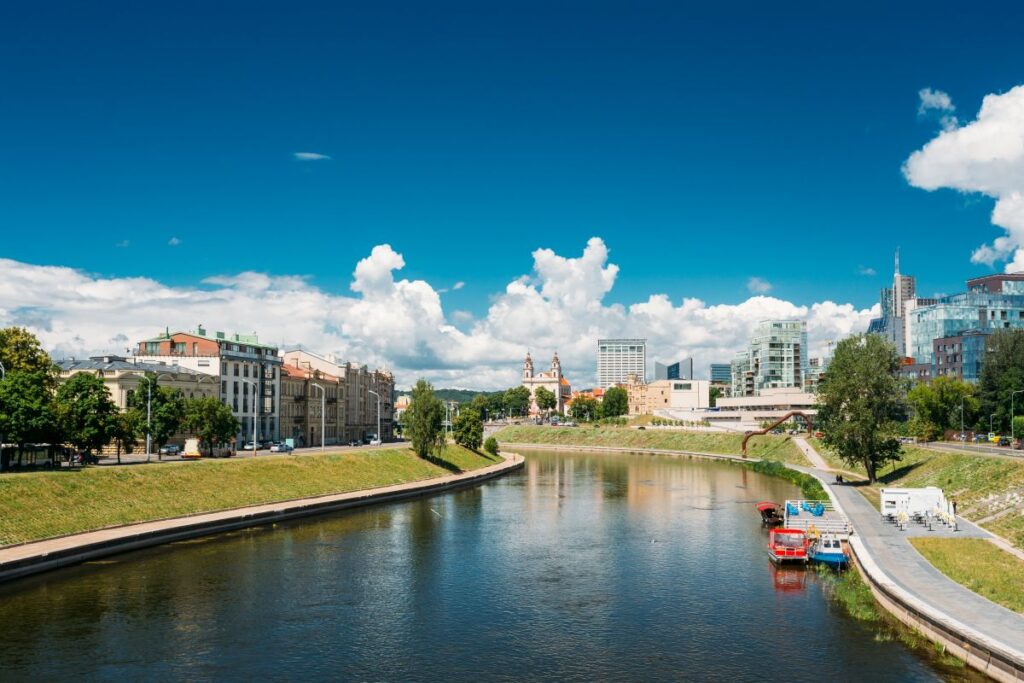
Lithuania has one of the most fascinating and resilient histories in Europe.
From ancient Baltic tribes and medieval empires to Soviet occupation and modern independence, the history of Lithuania is a story of survival, identity, and transformation.
Although Lithuania is a relatively small country today, it once controlled one of the largest territories in Europe through the powerful Grand Duchy of Lithuania. Over centuries, the country experienced wars, foreign occupations, political unions, and cultural struggles – yet managed to preserve its language, traditions, and national identity.
Today, Lithuania stands as a modern European Union and NATO member known for innovation, entrepreneurship, and rapid economic growth.
Understanding the country’s past helps explain why Lithuania has become such an important political, cultural, and economic force in the Baltic region.
Early History of Lithuania Before Statehood
Baltic Tribes and Pagan Culture
The earliest roots of Lithuania trace back to the Baltic tribes that inhabited the southeastern coast of the Baltic Sea thousands of years ago. These tribes were among the last pagan peoples in Europe and maintained their traditional beliefs long after much of the continent had converted to Christianity.
The ancient Lithuanians lived in tribal communities centered around agriculture, trade, hunting, and warfare. Their religion focused heavily on nature worship, sacred forests, rivers, and multiple deities connected to natural forces.
Unlike many neighboring societies, the Baltic tribes managed to resist foreign domination for centuries due to:
- Dense forests and difficult terrain
- Strong warrior culture
- Decentralized tribal organization
- Geographic isolation
These early communities laid the foundation for Lithuanian national identity and language, both of which remain deeply important in modern Lithuania.
Formation of Early Lithuanian Territories
By the 12th and 13th centuries, increasing pressure from foreign crusaders pushed Lithuanian tribes toward political unification.
The Teutonic Knights and Livonian Order launched military campaigns aimed at converting Baltic pagans to Christianity and expanding German influence across the Baltic region. In response, Lithuanian leaders began consolidating power and forming stronger military alliances.
This period marked the beginning of the Lithuanian state.
The Grand Duchy of Lithuania History
The Rise of Mindaugas – Lithuania’s First King
One of the most important figures in Lithuanian history was Mindaugas, who unified many Lithuanian tribes under centralized rule.
In 1253, Mindaugas was crowned the first and only King of Lithuania. His coronation represented the formal creation of the Lithuanian state and remains one of the most symbolic moments in the history of Lithuania timeline.
Mindaugas temporarily accepted Christianity as part of political alliances with Western Europe, though pagan traditions remained deeply rooted throughout Lithuanian society.
His reign helped Lithuania gain recognition among European powers and established the political foundations for future expansion.
Expansion of the Grand Duchy of Lithuania
Following Mindaugas, Lithuania rapidly transformed into a major regional power.
During the 14th and 15th centuries, the Grand Duchy of Lithuania expanded across vast territories including parts of:
- Modern Belarus
- Ukraine
- Poland
- Russia
- Latvia
At its peak, the Grand Duchy became one of the largest states in Europe.
The expansion occurred through:
- Military campaigns
- Strategic marriages
- Political alliances
- Flexible governance systems
Unlike many medieval empires, Lithuania often allowed conquered territories to maintain local customs, religions, and administrative systems. This approach helped stabilize the rapidly growing state.
The grand duchy of Lithuania’s history is especially significant because it positioned Lithuania as a major political and military force between Eastern and Western Europe.
Vytautas the Great and Lithuania’s Golden Age
Lithuania reached its peak under Vytautas the Great, one of the country’s most celebrated historical leaders.
His rule strengthened the state militarily, economically, and diplomatically.
One of the defining moments of this era was the Battle of Grunwald in 1410, where Lithuanian and Polish forces defeated the Teutonic Knights in one of medieval Europe’s most important battles.
The victory:
- Ended major crusader threats
- Strengthened Lithuanian influence
- Expanded regional stability
- Elevated Lithuania’s international standing
Under Vytautas, Lithuania became known for:
- Religious tolerance
- Advanced legal systems
- Trade growth
- Cultural diversity
This period is often considered Lithuania’s medieval golden age.
The Polish-Lithuanian Commonwealth
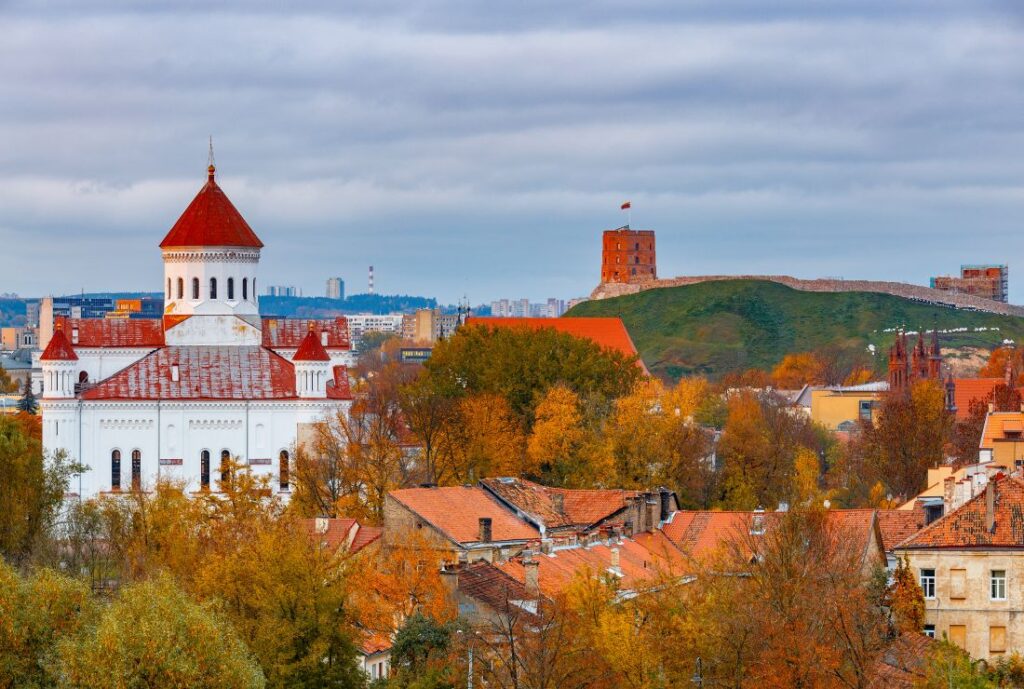
The Union of Lublin (1569)
In 1569, Lithuania entered into a political union with Poland through the Union of Lublin, creating the Polish-Lithuanian Commonwealth.
The Commonwealth became one of Europe’s largest and most influential political entities.
Lithuania maintained:
- Separate laws
- Military structures
- Administrative systems
However, the shared monarchy and parliament gradually increased Polish political and cultural influence over Lithuanian elites.
Political and Cultural Changes
During the Commonwealth era, Lithuanian nobility gained substantial political rights and influence.
The period also saw:
- Expansion of education
- Growth of Catholic institutions
- Increased European trade
- Cultural integration with Poland
At the same time, social inequality and political fragmentation weakened the state over time.
The political system allowed nobles extensive freedoms, but excessive decentralization eventually created instability.
Decline of the Commonwealth
By the 18th century, the Commonwealth faced growing pressure from neighboring powers including:
- Russia
- Prussia
- Austria
Internal political conflicts and weak centralized authority made the state vulnerable.
Between 1772 and 1795, the Polish-Lithuanian Commonwealth was partitioned multiple times until it disappeared entirely from the map of Europe.
Lithuania was absorbed into the Russian Empire.
Lithuania Under the Russian Empire
Russification and Cultural Suppression
Under Russian rule, Lithuanian national identity faced significant challenges.
The Russian Empire attempted to suppress Lithuanian culture through policies known as Russification.
These measures included:
- Restrictions on the Lithuanian language
- Bans on Latin alphabet publications
- Religious control
- Political repression
Despite these efforts, Lithuanians strongly resisted cultural assimilation.
One of the most remarkable aspects of this period was the movement of Lithuanian book smugglers, who secretly transported banned Lithuanian publications into the country.
These efforts helped preserve:
- Language
- Literature
- National consciousness
- Cultural identity
The resistance movement became a defining chapter in the brief history of Lithuania.
Lithuanian Independence in the 20th Century
Declaration of Independence in 1918
World War I dramatically reshaped Europe and created opportunities for national independence movements.
On February 16, 1918, Lithuania declared independence and established the modern Lithuanian state.
This date remains one of the most important national holidays in Lithuania today.
The newly independent republic faced numerous challenges:
- Territorial disputes
- Economic instability
- Military threats
- Political uncertainty
Nevertheless, Lithuania successfully established governmental institutions and began developing as a sovereign nation.
Interwar Lithuania
During the interwar period, Lithuania experienced modernization and economic growth. Because of disputes over Vilnius, Kaunas served as the temporary capital.
The country invested heavily in:
- Education
- Infrastructure
- Agriculture
- Industry
Lithuanian cultural identity strengthened significantly during this time.
However, political tensions in Europe continued to rise.
World War II and Occupation
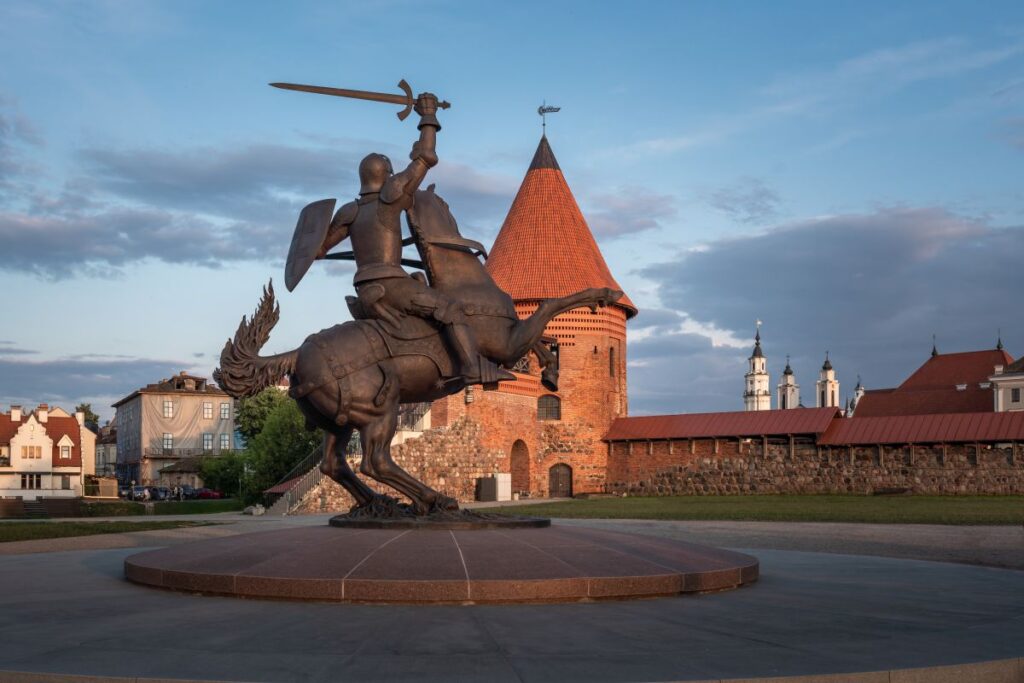
Soviet Occupation
In 1940, the Soviet Union occupied Lithuania under agreements connected to the Molotov-Ribbentrop Pact.
The occupation resulted in:
- Nationalization of private property
- Political arrests
- Deportations to Siberia
- Suppression of democratic institutions
Thousands of Lithuanians were deported or imprisoned during Soviet repression.
Nazi Occupation
In 1941, Nazi Germany invaded Lithuania during Operation Barbarossa.
The Nazi occupation brought devastation and tragedy, particularly for Lithuania’s Jewish population.
Before World War II, Lithuania had a vibrant Jewish community with deep historical roots. During the Holocaust, the overwhelming majority of Lithuanian Jews were murdered.
This remains one of the darkest chapters in the history of Lithuania.
Return of Soviet Rule
After Nazi Germany retreated, Soviet forces regained control of Lithuania in 1944.
Lithuania remained part of the Soviet Union for nearly five decades.
Lithuania During the Soviet Era
Life Under Soviet Rule
The Soviet period transformed Lithuanian society economically and politically.
Major changes included:
- State-controlled economy
- Industrialization
- Collectivized agriculture
- Strict censorship
Religious institutions faced heavy restrictions, and political dissent was harshly punished.
However, many Lithuanians continued preserving their national identity through:
- Underground cultural movements
- Religious communities
- Secret publications
- Family traditions
Armed and Cultural Resistance
Lithuanian resistance did not disappear after the Soviet occupation.
Partisan fighters known as the “Forest Brothers” conducted armed resistance against Soviet authorities for years after World War II.
Although ultimately defeated militarily, these resistance movements became powerful symbols of Lithuanian independence and patriotism.
Cultural resistance also remained strong throughout the Soviet era.
Restoration of Independence
Lithuania Declares Independence in 1990
By the late 1980s, reforms across the Soviet Union created opportunities for independence movements.
Lithuania became the first Soviet republic to declare the restoration of independence on March 11, 1990.
The independence movement, strongly supported by the Sąjūdis movement, played a major role in mobilizing public support.
The process was not easy. Soviet authorities initially attempted to suppress Lithuanian independence efforts through economic pressure and military force.
However, Lithuania ultimately succeeded.
International Recognition and Democratic Transition
Following the collapse of the Soviet Union in 1991, Lithuania gained broad international recognition.
The country rapidly implemented:
- Democratic reforms
- Market economy policies
- Legal modernization
- International integration
Lithuania focused heavily on strengthening Western alliances and rebuilding national institutions.
Lithuania Today
Joining NATO and the European Union
Lithuania joined both, European Union and NATO in 2004.
Membership provided:
- Economic opportunities
- Security guarantees
- International investment growth
- Expanded trade access
Today, Lithuania is considered one of the Baltic region’s most dynamic economies.
Modern Economy and Innovation
Modern Lithuania has developed a strong reputation in:
- Fintech
- Technology
- Manufacturing
- Logistics
- Startups
The country attracts entrepreneurs and international investors because of:
- EU market access
- Competitive business environment
- Skilled workforce
- Modern digital infrastructure
Lithuania has also become increasingly attractive for company formation and international business expansion.
History of Lithuania Timeline
Below is a simplified history of Lithuania timeline highlighting major historical milestones:
| Year | Event |
|---|---|
| 1253 | Coronation of King Mindaugas |
| 1385 | Union with Poland begins |
| 1410 | Battle of Grunwald |
| 1569 | Union of Lublin creates Commonwealth |
| 1795 | Lithuania absorbed into Russian Empire |
| 1918 | Lithuania declares independence |
| 1940 | Soviet occupation begins |
| 1941–1944 | Nazi occupation |
| 1990 | Restoration of Lithuanian independence |
| 2004 | Lithuania joins EU and NATO |
How Lithuanian History Still Shapes the Country Today
Strong National Identity
One of the most remarkable aspects of Lithuanian history is the preservation of national identity despite centuries of occupation and foreign rule.
Lithuania successfully preserved:
- Its language
- Cultural traditions
- Historical memory
- National pride
This resilience continues to influence Lithuanian politics, education, and society today.
Strategic Importance in Europe
Lithuania’s geographic location between Eastern and Western Europe has shaped its history for centuries.
Today, the country remains strategically important because of:
- Baltic regional security
- NATO cooperation
- EU integration
- Energy independence initiatives
Lithuania plays an increasingly active role in European politics and international diplomacy.
Economic Growth and International Business
Modern Lithuania combines historical resilience with rapid modernization.
The country has become especially attractive for:
- Startups
- Fintech companies
- International entrepreneurs
- Remote businesses
Its legal transparency and modern business environment continue attracting investors from around the world.
Final Thoughts
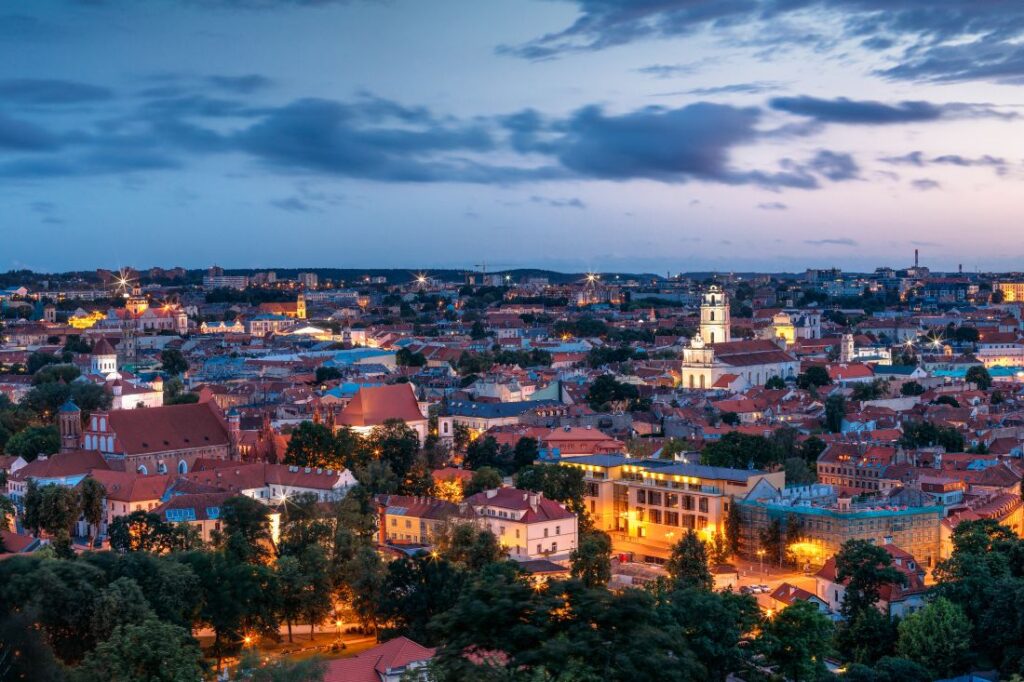
The history of Lithuania is far more powerful than many people realize.
From pagan Baltic tribes and medieval empires to Soviet occupation and modern independence, Lithuania has repeatedly demonstrated resilience and determination in the face of enormous challenges.
Its historical journey shaped not only the Baltic region but also broader European politics and culture.
Today, Lithuania stands as a modern democratic nation with a rapidly growing economy, strong national identity, and increasing global relevance.
For international entrepreneurs, investors, and businesses exploring opportunities in Lithuania, understanding the country’s historical and legal foundations provides valuable context for why Lithuania has become one of the most attractive business environments in the Baltic region.
Whether you are studying Lithuanian history, considering relocation, or exploring business opportunities, Lithuania’s remarkable story continues to influence its future.
Frequently Asked Questions
How old is Lithuania?
Lithuania’s statehood officially dates back to 1253 with the coronation of King Mindaugas, although Baltic tribes inhabited the region long before that.
What was the Grand Duchy of Lithuania?
The Grand Duchy of Lithuania was a medieval European state that became one of the largest countries in Europe during the 14th and 15th centuries.
When did Lithuania gain independence?
Modern Lithuania declared independence in 1918 and restored independence from the Soviet Union in 1990.
Was Lithuania part of the Soviet Union?
Yes. Lithuania was occupied and incorporated into the Soviet Union from 1940 until independence was restored in 1990.
Why is Lithuanian history important?
Lithuanian history is significant because it reflects centuries of political transformation, cultural resistance, and survival between major European powers.